
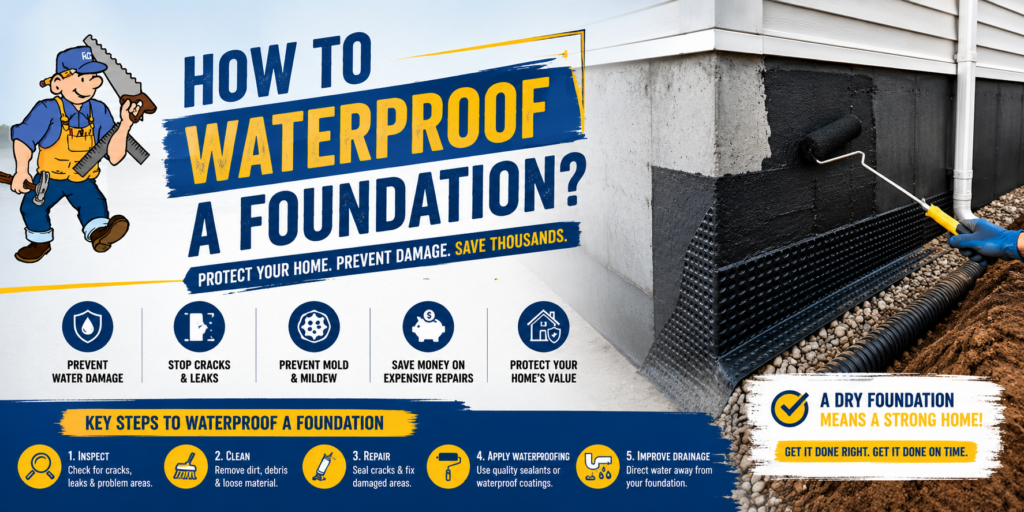
Water damage is one of the most serious dangers to your home, and Foundation Waterproofing is a solution you can implement to guard against it. From improving drainage systems to sealing foundation walls and installing long-lasting waterproofing solutions, we have helped countless homeowners stop expensive repairs at Econocrafters Remodeling and Roofing.
No matter the construction of your new home or if you’re just maintaining an older property, learning how to waterproof a foundation will help you avoid cracking, moldy basements, leaks, and costly future structural repair. There is no such thing as a dry foundation by chance. It does take some planning, it takes good materials, and it takes continued care to keep groundwater from your house.
Waterproofing A Foundation Is Very Important For Several Reasons
The foundation is the basis that supports your whole house. This moisture, when it penetrates repeatedly into concrete or masonry, can deteriorate the foundation progressively and cause cracks that permit water from above to seep into the basements or crawl spaces.
Humidity also leads to mold, rotting of wood, and puts indoor air quality at risk due to persistent, unpleasant odors. These problems may worsen in regions with high precipitation or poorly draining soils.
The significance of investing in foundation waterproofing at the earliest to avoid extensive repairs, thereby ensuring house values and long-term structure integrity, should not be ignored.
Source Of Foundation Water
Most homeowners believe foundation leaks only form during torrential downpours, but water can seep through multiple channels all year round.
Some common ones are: poorly graded yards, blocked gutters and downspouts, too much water pressure underground, broken systems that drain, and cracks in basement walls.
Concrete can slowly absorb moisture even in small amounts over time. Before choosing any waterproofing method, the source of water is always identified first.
Correct Shows a World of Difference
Most foundation problems start with water not having anywhere to go. A properly constructed drain system moves water away from the home instead of allowing it to pool against the foundation.
Effective drainage solutions often include:
- Extending downspouts away from the house
- Keeping gutters clean all year round
- Installing French drains where necessary
These upgrades function alongside waterproofing materials to alleviate hydrostatic pressure on basis dividers.

Fix Your Foundation Cracks Before They Get Worse
It can seem like a very insignificant problem, but in any case, small cracks become an entry point for water with time! After identifying if the cracks are simply cosmetic or structural, professional crack repair will use the right method to fix them. Common means include epoxy injections, polyurethane sealants, and specialized repair materials based on the crack type.
Moisture continues to get into the foundation through cracks, even small ones, that, if left unattended, can become larger structural issues. These issues can be flagged up before they get to the point where repairs are very costly through routine inspections.
Home Protection: Basement Waterproofing
If your property has a basement, you need to think about waterproofing. Interior drainage systems, sump pumps, vapor barriers, moisture-resistant wall coatings, and improved ventilation are all common basement waterproofing methods.
They can co-operate in regulating moisture, whilst safeguarding habitable spaces, storage zones, and mechanical devices. Maintaining a dry basement also helps reduce the risk of mold growth, which helps to improve overall indoor air quality.
Indicators That Your Foundation Could Have Redundant Moisture Problems
Others will be apparent only after much damage has been done. Some indicators to keep an eye out for are: musty odours, peeling paintwork, damp basement walls, standing water or white mineral deposits on the concrete, mold growth, uneven floors, or widening foundation cracks.
These signs mean your foundation has been suffering from moisture exposure and needs a review by professionals immediately. Intervention at an early stage is almost always cheaper than fixing severe structural damage at a later point in time.
Frequently Asked Questions
How do I know whether waterproofing is required for the foundation of your home?
Some signs include wet walls in the basement, musty smells in the air, white mineral stains forming on concrete, or repeated leaks that reappear every time it rains, as well as cracks visible in the foundation.
Should your home have foundation waterproofing?
Professional waterproofing usually helps those homes in regions where rain is constant, dysfunctional drainage systems exist, soils contain abundant clay, or if they have a completed basement.
What is the difference between damp proofing and waterproofing?
Damp-proofing can also provide some resistance to water in soil, but only waterproofing provides a much higher level of protection from water infiltration and hydrostatic pressure.
How to ensure gutters are cleared regularly for foundation protection?
Most contractors suggest that gutters should be cleaned at least two times a year, typically in spring and fall, to support water flows away from the home.
Does foundation waterproofing help resale value?
Yes. If buyers see verified waterproofing and water mitigation upgrades, this lessens the possibility of both future structural issues and damage caused by moisture.